
Quick Facts
- Location: Amar Kutir Road, near Sonajhuri Forest, Bolpur, around 4–5 km from central Santiniketan
- Open: Saturdays and Sundays (best to visit between 10:00 AM and 5:00 PM)
- How to Reach: 10–15 minutes by auto or toto from Bolpur Railway Station
- From Resort Titli: Located in Sonajhuri Pally, just a short 3–5 minute walk from the haat.
- What to Buy: Kantha-stitch sarees, Dokra jewellery, terracotta art, wooden handicrafts, handmade bags, paintings, and local souvenirs
- Entry Fee: Free
- Payment: Carry cash; many stalls also accept UPI.
If you’re staying at Resort Titli, visiting Sonajhuri Haat is one of the easiest and most rewarding experiences in Santiniketan. Located just a short walk from the resort, this vibrant weekend market brings together local artisans, Baul musicians, folk culture, and handcrafted treasures in the heart of the Sonajhuri forest.
In this guide, you’ll discover the latest Sonajhuri Haat timings, how to reach the market, what to buy, the best time to visit, and practical tips to help you make the most of your trip in 2026.
What Is Sonajhuri Haat (and Why It’s Also Called Khoai Mela)
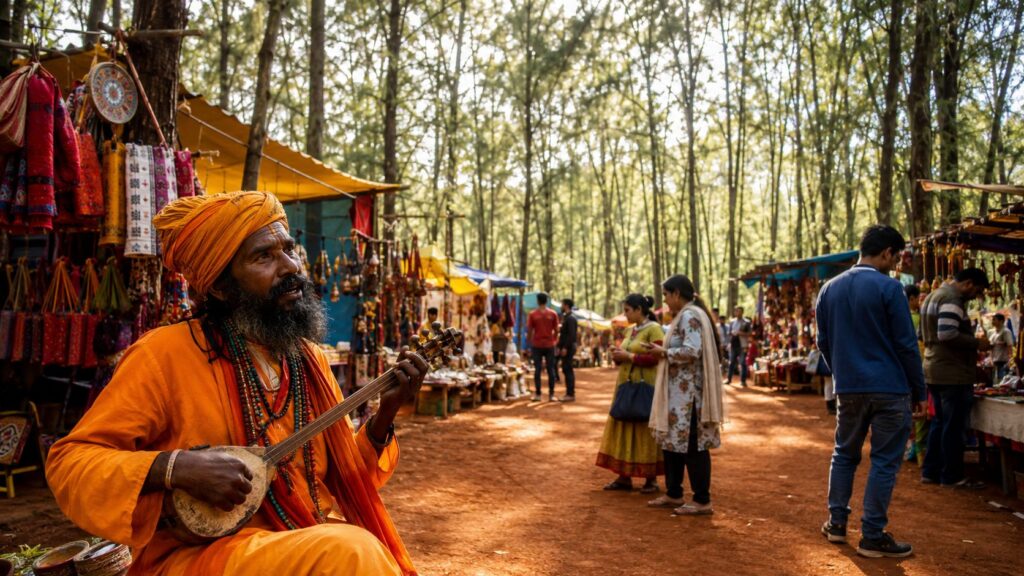
Sonajhuri Haat is a popular weekend handicraft market held beneath the Sonajhuri trees near the famous Khoai landscape in Santiniketan, West Bengal. Because the market takes place beside the red-soil Khoai terrain, many locals and travellers also refer to it as Khoai Haat, Khoai Mela, or Shonibarer Haat (Saturday Market).
Every weekend, local artisans, craftsmen, and tribal communities showcase handmade products, while Baul singers and Santhal performers create a vibrant cultural atmosphere. From handwoven textiles and Dokra jewellery to terracotta crafts and paintings, the market offers an authentic glimpse into the artistic heritage of Santiniketan.
Unlike a purpose-built tourist attraction, Sonajhuri Haat is a traditional local market where visitors can experience shopping, folk music, local art, and rural Bengal culture all in one place. It’s one of the most popular places to visit in Santiniketan for anyone looking to experience the region beyond its famous university campus.
Sonajhuri Haat Timings (2026)
One of the most common questions travellers ask is, “When is Sonajhuri Haat open?” The answer isn’t always straightforward because timings can vary slightly depending on the season and local arrangements.
Generally, Saturday is the main market day, when almost all stalls are open and cultural performances take place throughout the afternoon. On some weekends, a smaller number of vendors may continue trading on Sunday, although Saturday remains the best day to experience the market at its busiest.
Typical timings:
- Main market day: Saturday
- Approximate opening time: Around 1:00–1:30 PM
- Market closes: Around sunset (approximately 5:30–6:00 PM, depending on the season)
- Best time to visit: Between 1:30 PM and 4:00 PM for the widest variety of stalls and performances.
If you’re driving, it’s worth arriving before mid-afternoon, as vehicle access near the market may be restricted once the crowds build up. Since local timings occasionally change due to festivals or administrative arrangements, it’s always a good idea to confirm the latest schedule with your hotel or a local resident before visiting.
How to Reach Sonajhuri Haat from Bolpur Station
Reaching Sonajhuri Haat is easy from Bolpur–Santiniketan Railway Station.
- By auto or toto: Around 10–15 minutes. Every local driver is familiar with Sonajhuri Haat, so you usually won’t need to provide the exact address.
- By car from Kolkata: Approximately 170–190 km, taking around 3.5–4 hours via the Durgapur Expressway.
- Nearest airport: Kazi Nazrul Islam Airport, Durgapur (around 60 km away) is the closest airport, while Netaji Subhas Chandra Bose International Airport, Kolkata (around 180 km away) offers more domestic and international flight options.
Planning your journey? Check out our detailed guide on travelling from Bolpur Station to Sonajhuri Haat for routes, transport options, and local travel tips.
Staying at Resort Titli? You’re Just Minutes Away
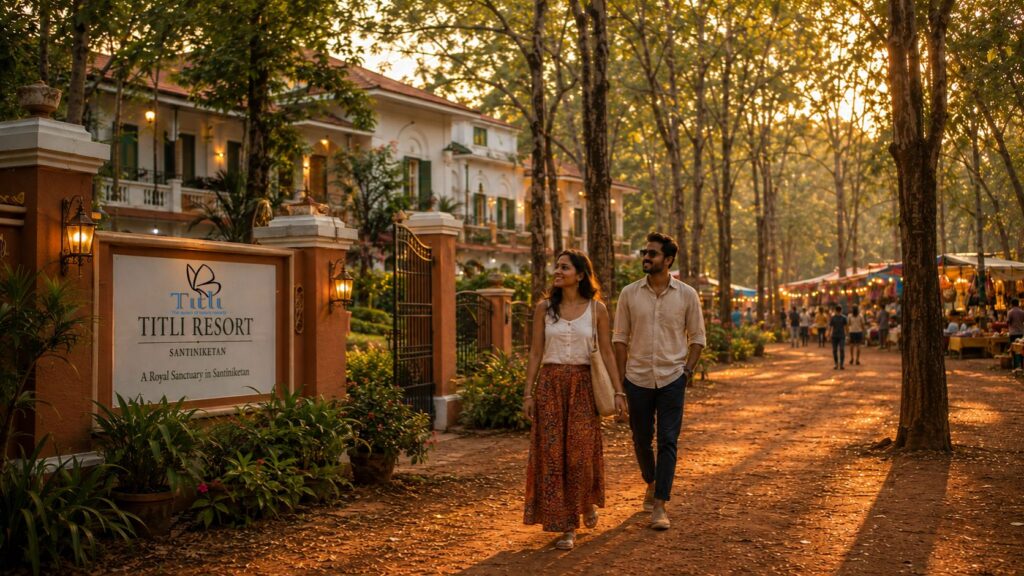
One of the biggest advantages of staying at Resort Titli is its location. Situated in Sonajhuri Pally, the resort is just a short walk from Sonajhuri Haat, making it one of the closest places to stay for visitors planning to explore the weekend market.
Instead of arranging transport or worrying about parking restrictions, you can simply walk to the haat, spend a relaxed afternoon browsing handmade crafts, enjoying Baul music, and experiencing the unique atmosphere of Santiniketan before returning comfortably to the resort.
If you’re planning your visit around a Saturday, staying nearby allows you to enjoy the market at your own pace without the hassle of travelling back and forth.
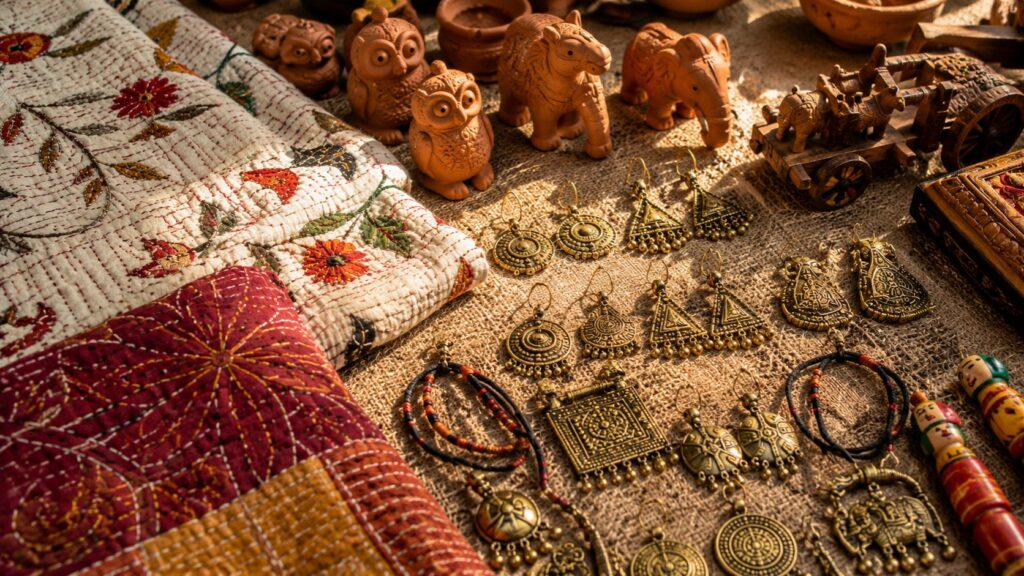
The haat is genuinely good for handmade goods at fair prices, provided you know roughly what to expect:
- Kantha-stitch textiles: sarees, dupattas, and running fabric with traditional embroidery
- Dokra jewelry: lost-wax metal casting, a Bengal tribal craft speciality; earrings and pendants are the easiest to carry home
- Terracotta: pots, decorative plates, and small figurines
- Wooden crafts and toys: hand-carved, often from local Santhal artisans
- Bengali snacks: jhalmuri, puchka, and nolen gur (date-palm jaggery) sandesh and tea, all worth trying while you browse
On price: most small handmade items (jewelry, small textiles) run roughly ₹100 – ₹500; larger pieces of furniture or textiles cost more. Prices aren’t fixed; see bargaining below.
Is Bargaining Allowed at Sonajhuri Haat?
Yes, and it’s expected, but gently. Vendors here are largely the artisans themselves or their families, not middlemen with inflated starting prices (a few visitors have noted disappointment when they felt otherwise, see the honest note below). A polite, friendly back-and-forth that lands somewhere in the middle is the norm; aggressive haggling isn’t necessary and isn’t well received.
Baul Music, Santhal Dance & the Cultural Experience
Beyond the shopping, the haat’s real character comes from its live performances, Baul singers with their signature ektara playing between stalls, and Santhal dance groups performing through the afternoon. Some performances are donation-based; a small contribution is appreciated if you stop to watch or record. It’s a genuine part of Bengal’s folk cultural tradition, not a staged tourist show, which is part of what makes it worth the visit even if you don’t buy anything.
Practical Tips: Parking, Cash, What to Wear & Safety
- Cash is king. Some stalls now accept UPI, but smaller vendors still prefer cash, carrying small denominations.
- Parking and vehicle access: After roughly 3 PM, a police barricade stops vehicles from approaching the fairground directly. Arrive earlier if you’re driving, or plan to walk the last stretch.
- Footwear: The ground is uneven, sandy, and forested; comfortable walking shoes matter more than they seem like they would.
- Families with kids: Generally safe and family-friendly, but it’s an open-air market with crowds and uneven terrain; keep an eye on small children, and bring water and sun protection if visiting midday.
- Weather: Winter (roughly October – March) is the most comfortable season; carry light rain protection if visiting during monsoon months.
Is Sonajhuri Haat Worth Visiting? An Honest Take
Almost every visitor guide to Sonajhuri Haat is glowing, and for good reason; it’s a genuinely distinctive experience. But it’s fair to mention that not every visit lands perfectly: a few reviewers have noted that some stalls are run by resellers rather than the artisans themselves, and that the market can feel more commercial and crowded than expected on a busy Saturday. Our honest take: it’s still very much worth an afternoon, especially if you arrive early (before the 3 PM rush), keep expectations realistic, it’s a real, working market, not a museum, and treat the bargaining and browsing as part of the fun rather than a mission to find the “authentic” version of everything.
Best Time of Year to Visit
Winter months (October–March) bring the most comfortable weather and the fullest markets. If your visit lines up with Poush Mela (December) or Basanta Utsav (around Holi, March), Sonajhuri Haat runs alongside these larger festivals and gets considerably busier, worth planning for if you want the full atmosphere, or worth avoiding if you’d rather have a quieter browse. (See our [Poush Mela 2026 guide] and [Best Time to Visit Santiniketan guide] for the full seasonal breakdown.)
Frequently Asked Questions
No. Sonajhuri Haat is primarily held on Saturdays, which is when the market is at its busiest. On some weekends, a smaller number of vendors may continue trading on Sunday, but Saturday remains the best day to visit. As local schedules can occasionally change, it’s always a good idea to confirm the latest timings before your visit.
No. Entry to Sonajhuri Haat is completely free. You can explore the market, enjoy the Baul music, and watch local cultural performances without paying an admission fee. You’ll only pay for any food, handicrafts, or souvenirs you choose to purchase.
Many vendors now accept UPI payments, but smaller stalls may still prefer cash. Carrying some cash is recommended in case digital payments aren’t available.
Yes. Sonajhuri Haat is generally a family-friendly destination. However, the pathways are made of natural red soil and can be uneven, while the market becomes crowded during peak hours. Keep children close and carry drinking water, especially during warmer months.
One of the biggest advantages of staying at Resort Titli is its location. Situated in Sonajhuri Pally, the resort is just a short walk from Sonajhuri Haat. Guests can easily walk to the market without arranging transport or worrying about parking restrictions on busy Saturday afternoons.
The best time to visit is between October and March, when the weather is pleasant for sightseeing and outdoor shopping. If you’re visiting during Poush Mela (December) or Basanta Utsav (March), you’ll experience a festive atmosphere, although the area is usually much busier during these events.
Popular items include Kantha-stitched textiles, Dokra jewellery, terracotta crafts, wooden handicrafts, handmade bags, paintings, and locally made souvenirs.
Most visitors spend 2–3 hours exploring the market, shopping for handicrafts, enjoying Baul performances, and sampling local snacks.