
If you’re searching for the best time to visit Santiniketan for Poush Mela, here’s the short answer: aim for Day 2 or Day 3 of the fair, arriving between 8:30 AM and 11 AM, and book your stay for 4–5 nights spanning the opening weekend. That window gives you the full cultural spectacle, Baul music, the fairground at its liveliest, Sonajhuri Haat on the Saturday in between, without the bottleneck crowds and sold-out rooms of the closing days.
Below is the complete breakdown: expected 2026 dates, a day-by-day crowd and weather guide, how to get there, and where to stay so you’re not scrambling for a room in December. If you’re searching for the best time to visit Santiniketan for Poush Mela, here’s the short answer: aim for Day 2 or Day 3 of the fair, arriving between 8:30 AM and 11 AM, and book your stay for 4–5 nights spanning the opening weekend. That window gives you the full cultural spectacle, Baul music, the fairground at its liveliest, Sonajhuri Haat on the Saturday in between, without the bottleneck crowds and sold-out rooms of the closing days.
Below is the complete breakdown: expected 2026 dates, a day-by-day crowd and weather guide, how to get there, and where to stay so you’re not scrambling for a room in December.
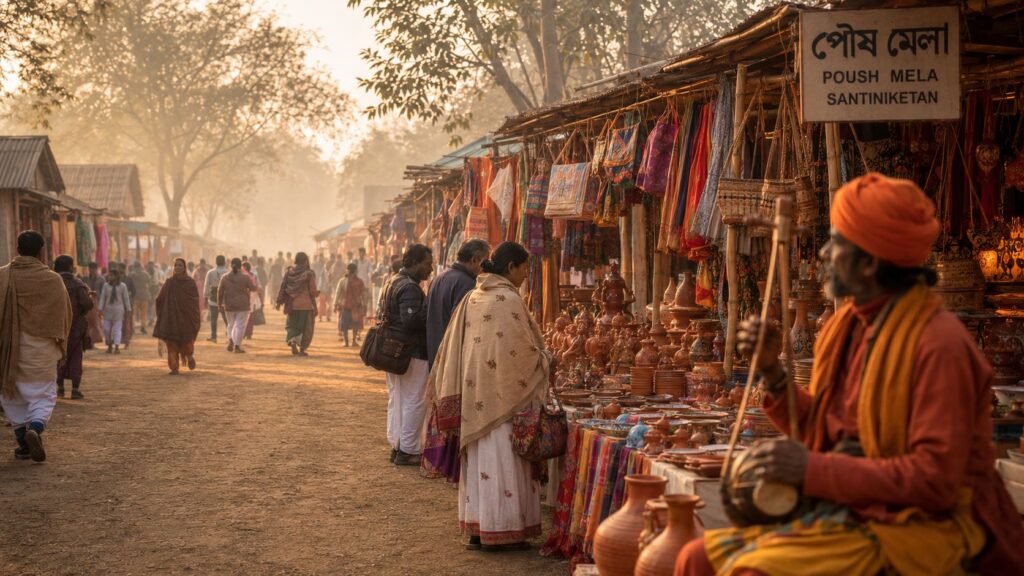
When Is Poush Mela 2026? Expected Dates
Poush Mela follows the Bengali calendar, not the Gregorian one, it begins every year on 7 Poush, the 7th day of the Bengali month of Poush, which usually lands in the last week of December. Visva-Bharati University and the Santiniketan Trust typically confirm the exact dates only in November, close to the event.
Based on the last few years’ pattern:
| Year | Dates | Duration |
| 2025 | December 23–28 | 6 days |
| 2024 | Late December | 6 days |
| 2023 | Early December (smaller scale) | Reduced |
Going by this pattern, Poush Mela 2026 is expected to fall between December 21–28, 2026, most likely opening around 7 Poush (approx. December 22–23). Treat this as a planning estimate, not a confirmed date. Official confirmation from Visva-Bharati usually arrives in the second week of November, and we’ll update this guide the moment it’s announced. If you’re booking flights or trains in advance, keep a 2–3 day buffer around this window.
Why the Exact Day You Arrive Matters More Than the Month
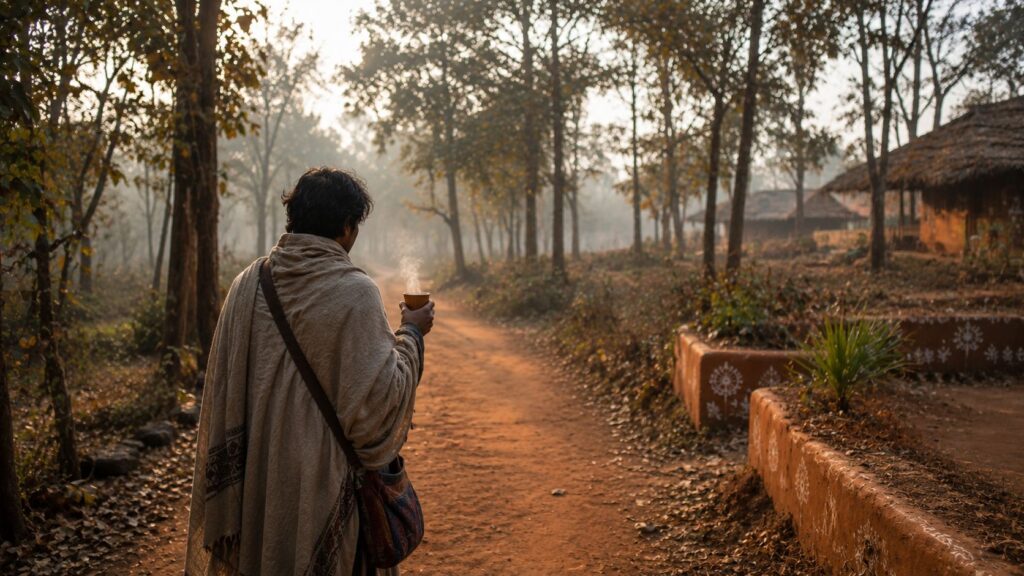
Most guides tell you “visit in winter” and stop there. That’s not specific enough to actually plan a trip around. Here’s how the fair itself behaves across its six days, so you can pick your window on purpose:
Day 1 (Opening day): Inauguration ceremony, shehnai at sunrise, the Vaitalik procession, and a prayer meeting at Chhatimtala. Beautiful for the ritual and history, but stalls are still settling in and half the vendors aren’t fully set up until afternoon.
Day 2–3 (The sweet spot): Stalls are fully operational, crowds are present but manageable, and evening cultural performances, Rabindra Sangeet, Baul music, Santhali and Chhau dance, are at full swing. This is when the fair looks and feels the way the photographs promise.
The Saturday that falls within the mela week: Sonajhuri Haat, the weekly handicraft market a few kilometres away, runs alongside the mela and gets exceptionally lively during this period. If a Saturday falls inside your visit window, don’t skip it.
Day 4–5: Peak crowd days, especially weekends. Parking fills up early, popular food stalls run out of items by evening, and walking through the main lanes takes patience. Go if you specifically want the “biggest crowd” experience; avoid it if you’re travelling with elderly guests or young children.
Day 6 (Closing day): Many vendors start packing early, and the energy tapers off, though some stalls linger into January regardless of the official closing date.
Best Time to Visit Santiniketan: Weather Guide
Winter is unanimously the season to visit Santiniketan, and Poush Mela sits right in the middle of it. Here’s what to expect:
| Month | Day Temp | Night Temp | Conditions |
| November | 26–29°C | 14–17°C | Pleasant, minimal fog |
| December | 22–25°C | 8–12°C | Cold mornings, foggy, ideal for the mela |
| January | 20–23°C | 8–11°C | Coldest month, clear skies by midday |
| February | 24–27°C | 13–16°C | Mild, good for Basanta Utsav instead |
Mornings during the mela can dip close to single digits, so carry a proper jacket or shawl, this catches first-time visitors off guard more than anything else. By late morning the fog clears and the day turns pleasant enough for hours of walking.
Complete Visitor Guide: Getting to Santiniketan
By train: The most reliable option. Bolpur Shantiniketan railway station connects directly to Howrah and Kolkata via several express trains, with the journey taking roughly 2.5–3 hours. During the mela, trains run fuller than usual; book well in advance.
By road: Kolkata to Bolpur is about 160 km via NH2/NH19, taking 3.5–4 hours depending on traffic. Self-drive and shared cabs are both common; expect slower movement near Bolpur town itself during mela week due to road diversions and parking management.
By air: The nearest airport is Netaji Subhas Chandra Bose International Airport, Kolkata, around 170–190 km away, followed by a road or rail transfer.
Getting around locally: Auto-rickshaws, e-rickshaws, and cycle-vans handle short hops well. For the Purba Palli mela ground itself, most stays within 2–3 km are walkable or a five-minute auto ride, worth checking before you book, since traffic restrictions during the fair can make longer drives frustrating.
Where to Stay for Poush Mela: What Actually Matters
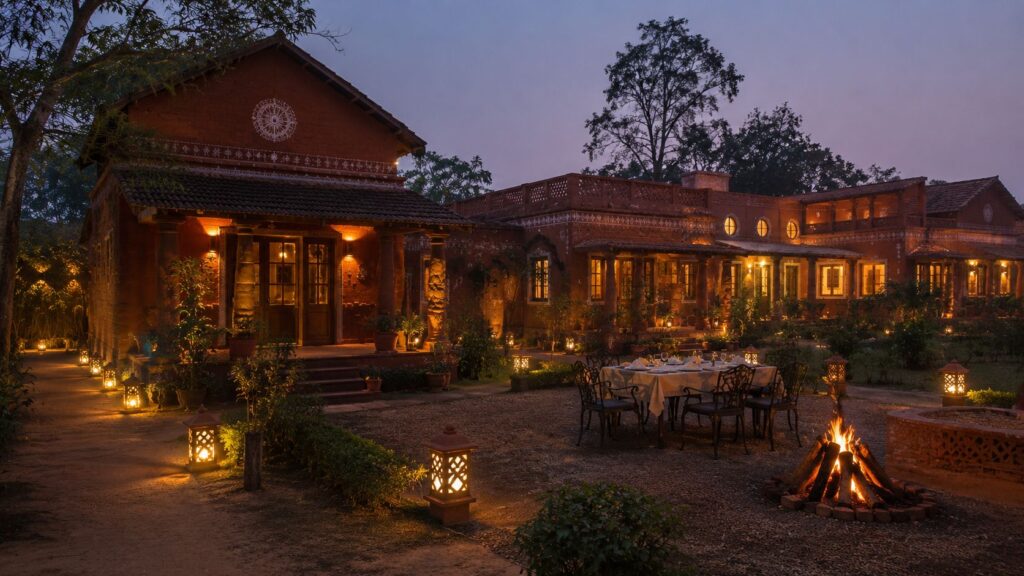
Rooms in Santiniketan and Bolpur fill up fast for Poush Mela, often weeks in advance for the mela weekend. Rather than a generic list, here’s what should actually decide where you book:
- Distance from Purba Palli ground: Anything beyond 5–6 km means real traffic delays during the fair, since local roads get congested and partially diverted.
- Generator/power backup: Not every property handles the occasional winter power fluctuation gracefully, worth confirming.
- Early check-in flexibility: If you’re arriving by an early train to catch the Day 2 sweet spot, a property that accommodates early check-in saves you a wasted morning.
- On-property dining: Mela-week traffic makes stepping out for every meal a hassle. A resort with its own multi-cuisine restaurant is a genuine convenience, not just a luxury add-on.
- Quiet at night: Ironically, some properties right next to the fairground get noisy well past midnight during mela week; a short drive away can mean a much better night’s sleep without losing proximity.
If you’re weighing a heritage boutique stay against a larger resort chain, boutique properties in Bolpur tend to offer a quieter, more personal experience with easier last-minute flexibility on room types, useful if your plans shift once the official mela dates are confirmed. Whichever you choose, lock in your dates the moment the 2026 schedule is announced; the good rooms go first.
Beyond the Fair: What Else to Combine With Your Visit
Since you’re already making the trip, build a 3–4 day itinerary rather than a single-day dash:
- Visva-Bharati University campus: Tagore’s open-air classrooms and Kala Bhavana
- Sonajhuri Haat / Khoai Mela: the Saturday handicraft market under the mahua trees
- Amar Kutir: batik, leather goods, and cooperative handicrafts
- Ballavpur Wildlife Sanctuary: spotted deer and migratory birds, best at dawn
- Kopai River banks: the river that inspired several of Tagore’s works, lovely at sunset
- Kankalitala Temple: one of Bengal’s Shakti Peeths, a short drive out
What to Eat at Poush Mela
Winter food in Santiniketan is a season unto itself. Look out for nolen gur sandesh and patishapta (both made only with fresh date-palm jaggery available this time of year), luchi–alur dom, jhalmuri, ghugni, and piping hot cha served in clay kulhads. Most of these are exclusive to the winter stalls and worth planning meals around.
Frequently Asked Questions
Day 2 or 3 of the six-day fair, arriving mid-morning, gives you full stalls, strong cultural performances, and manageable crowds, the best balance most visitors are looking for
Not officially confirmed as of mid-2026. Based on the last few years’ pattern, expect the fair to run roughly December 21–28, 2026, with official dates typically announced by Visva-Bharati in November.
Officially six days since 2017 (previously three days), though some stalls remain in place for weeks after the formal closing.
Entry has traditionally been free, though a nominal entry fee has been introduced in some recent years for crowd management. Confirm current fees closer to the date.
At least 3–4 weeks before the fair, and ideally as soon as dates are officially confirmed in November, rooms near Purba Palli ground sell out fastest.
Warm layers for early-morning fog and cold nights (temperatures can dip to 8°C), comfortable walking shoes, cash for stalls, and a cloth bag for handicraft shopping.
This guide will be updated with confirmed dates as soon as Visva-Bharati and the Santiniketan Trust make the official announcement.